EU AI Act Nudify Ban Starts December 2: What NSFW AI Tools Face
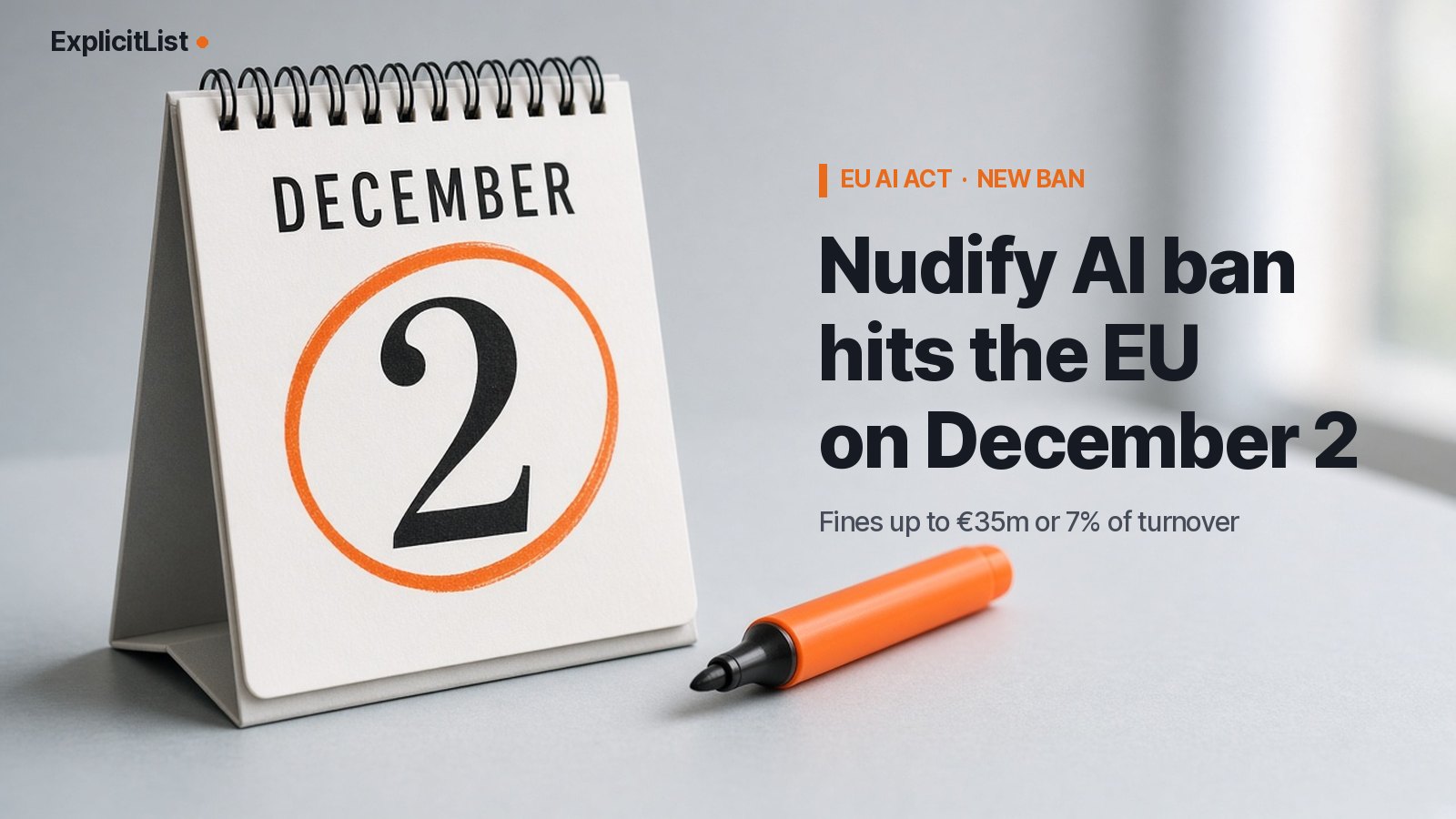
From December 2, 2026, it becomes illegal across the European Union to sell, launch or use an AI system that produces realistic sexual images, video or audio of an identifiable real person without that person’s explicit consent. The same date brings a ban on AI systems that generate child sexual abuse material. Both rules are new prohibitions added to Article 5 of the EU AI Act, and breaking them can cost a company up to €35 million or 7% of its worldwide annual turnover, whichever is higher.
The changes arrive through the Digital Omnibus on AI, a package of amendments to the AI Act. According to the European Commission’s AI Act Service Desk, the two prohibitions “will apply from 2 December 2026”, while the rest of the Act’s prohibited-practices rules have been enforceable since August 2, 2026. The Commission’s own policy page describes the target in plain terms: systems that generate non-consensual intimate content or abuse material, “such as AI ‘nudification’ apps”.
What the new rules say
The amended Article 5 adds two points:
- Point (ba) bans placing on the market, putting into service or using an AI system that generates or manipulates realistic material showing an identifiable person’s intimate parts or that person in sexually explicit activity, unless the person gave “freely-given, specific, informed, unambiguous and explicit consent” to that generation.
- Point (bb) bans AI systems that generate or manipulate child sexual abuse material as defined in the EU’s 2011 directive on the subject.
The penalty ceiling comes from Article 99(3), which already applies to every Article 5 violation.
Who is on the hook
The Omnibus recitals draw a line between the companies that build a tool and the people who use it. Providers fall under the ban in two cases: when a system is intended to make this kind of material, or when making it is a “reasonably foreseeable and reproducible outcome” and the provider has no reasonable safeguards to stop it. The text lists examples of such safeguards, including refusal training, prompt guardrails, output filtering, abuse detection and notice-and-action systems. Users are covered only when they use an AI system for the purpose of creating this material, including by getting around a tool’s protections.
The recitals also say the ban should not stop providers from developing image and video generation in general.
What it means for NSFW AI tools
The prohibition is about real, identifiable people and about minors. It does not outlaw adult AI image generators, AI girlfriend apps or roleplay platforms that work with fictional characters. What changes is the burden on general-purpose generators: a service that lets anyone upload a photo of a real person and undress it, with no meaningful filter, now sits squarely inside the ban.
Expect EU-facing image and video tools to tighten photo-upload features, face-swap options and “edit this photo” modes before the deadline. The site Intimeros, citing the legal news service MLex, reported that the EU AI Office treats AI companions as a “high concern” area for testing and enforcement, although no investigation of a named app has been reported.
December 2 is also the deadline for AI content generators already on the market before August 2, 2026 to meet the Article 50(2) duty to mark synthetic images, audio and video as AI-generated in a machine-readable way.
The bigger picture
The EU move follows a UK law covering realistic AI-generated sexual imagery, which we covered in UK law criminalises realistic AI-generated porn, and Apple’s new 18+ rating for AI companion apps. Regulators are converging on the same split: adult content about fictional characters is tolerated, while sexual imagery of real people without consent is not. Browse tools in our AI image generator category.
Sources
- ai-act-service-desk.ec.europa.eu/en/ai-act/article-5
- ai-act-service-desk.ec.europa.eu/en/ai-act/faq/when-does-enforcement-start
- ai-act-service-desk.ec.europa.eu/en/ai-act/timeline/timeline-implementation-eu-ai-act
- ai-act-service-desk.ec.europa.eu/en/ai-act/article-99
- digital-strategy.ec.europa.eu/en/policies/regulatory-framework-ai
- artificialintelligenceact.eu/ai-act-explorer/digital-omnibus
- intimeros.com/news/eu-ai-office-ai-companions